
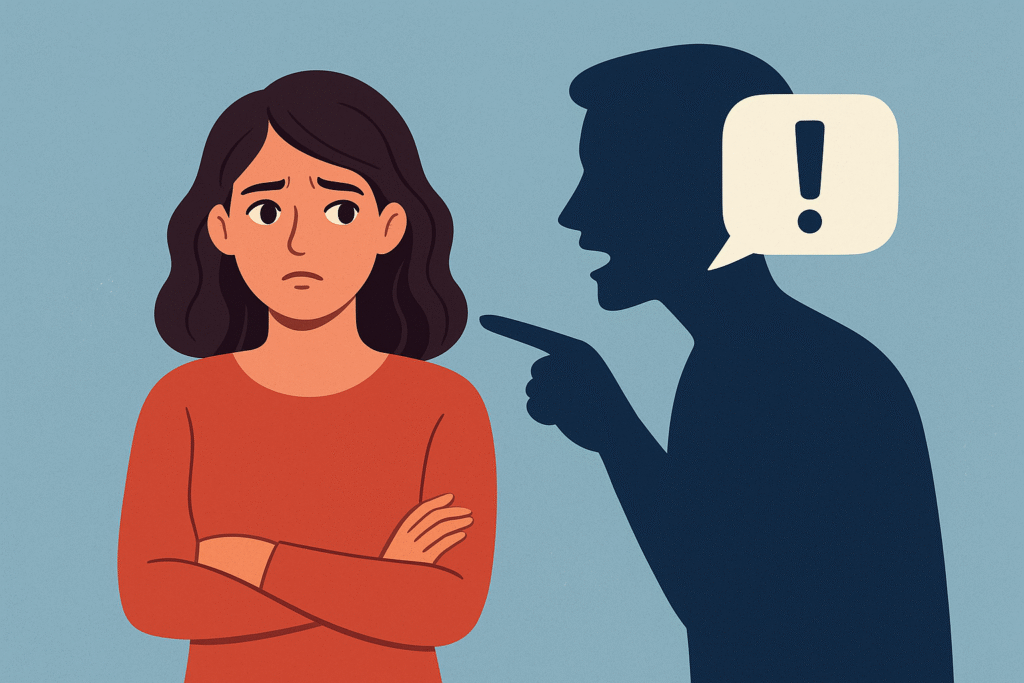
Manipulation in relationships is one of the most damaging — yet most misunderstood — forms of emotional influence. Whether you’re dating online or offline, emotional manipulation can slowly undermine your confidence, distort your sense of reality, and keep you trapped in a toxic cycle.
Understanding the signs of manipulation is essential if you want to build healthy romantic connections. This article will help you recognize manipulative behaviors, respond to them, and protect your emotional well-being.
🔍 What Is Manipulation in Relationships?
Manipulation is a form of psychological control where one partner uses emotional pressure, guilt, or fear to influence the other. The manipulator often disguises their behavior as care, concern, or “love,” making it difficult to recognize.
Manipulation can happen both in real-life relationships and online dating.
For example, on dating platforms, a manipulator may use sweet talk, guilt, or emotional pressure to gain attention, money, or power.
Common Signs You Might Be Manipulated
✔️ You feel guilty most of the time — often without a clear reason
✔️ You walk on eggshells, afraid to upset your partner
✔️ Your feelings are dismissed, minimized, or mocked
✔️ Your partner uses emotional blackmail to get what they want
✔️ Your partner avoids responsibility and makes everything your fault
✔️ You feel drained, confused, or insecure after interactions
If you’ve noticed manipulative patterns repeating across different relationships, read our guide on psychological patterns in relationships — it explains why we attract the same dynamics and how to break the cycle. You might also recognize signs of emotional exploitation in our article how to tell if someone is using you emotionally.
⚠️ Most Common Types of Manipulation
1. Guilt-Tripping
This is one of the easiest ways for a manipulator to control you.
Examples of guilt-tripping:
- “If you really loved me, you’d do it.”
- “I sacrificed so much for you.”
- “I guess I’m just not important to you.”
Why it’s dangerous:
It makes you feel responsible for your partner’s emotions.
How to respond:
Set boundaries and remind yourself: love is not proven through guilt.
2. Gaslighting
Gaslighting is a psychological manipulation tactic that makes you question your own reality, memory, or judgment.
Classic gaslighting phrases:
- “You’re imagining things.”
- “You’re too sensitive.”
- “That never happened.”
- “Why are you making drama?”
Why it’s dangerous:
It destroys self-trust and creates emotional dependency.
How to respond:
- Write down conversations or events
- Talk to a friend to get perspective
- Trust your instincts — not their version of events
👉 Want to understand emotional control better? Read:
Flirting as a Way to Boost Self-Esteem (добавишь правильную ссылку после публикации)
3. Threats & Ultimatums
Manipulators use threats (emotional or practical) to force compliance.
Examples:
- “If you don’t stop talking to him, we’re done.”
- “Do what I want, or I’ll leave.”
- “If you don’t help me, something bad will happen.”
Why it’s dangerous:
It creates fear-driven obedience rather than genuine connection.
How to respond:
Remember: real love never requires fear to function.
4. Silent Treatment
Also known as emotional withdrawal or “freezing you out.”
Signs of silent treatment:
- Ignoring messages
- Withdrawing affection
- Refusing to talk without explanation
- Acting cold until you apologize for something you didn’t do
Why it’s dangerous:
It punishes you emotionally and makes you desperate for their attention.
How to respond:
Explain once that silent treatment is unhealthy — then step back.
5. Love Bombing — When Excessive Affection Is a Red Flag
Love bombing is one of the most misunderstood forms of manipulation — because it feels wonderful at first.
It involves overwhelming someone with affection, attention, compliments, and grand gestures at the very beginning of a relationship. Texts all day, expensive gifts, declarations of love within weeks, making you feel like the most special person alive.
The purpose is to create intense emotional attachment quickly — before you’ve had enough time to see who this person actually is.
Signs of love bombing:
- Declarations of love within days or weeks of meeting
- Constant contact that feels suffocating if you slow down
- Excessive compliments that feel disproportionate to how well they know you
- Pushing for commitment or exclusivity unusually early
- Making you feel guilty for needing space or moving at a normal pace
Why it’s dangerous: Love bombing creates emotional dependency. By the time the manipulation begins — the criticism, the control, the withdrawal — you’re already deeply attached to the idealized version of them that was presented early on.
How to respond: Let attraction develop gradually. Genuine interest builds over time — it doesn’t arrive fully formed in week two. If intensity feels overwhelming rather than exciting, that contrast is worth paying attention to.
6. Isolation — Cutting You Off From Your Support Network
A more advanced manipulation tactic involves gradually isolating you from friends, family, and other sources of support.
It rarely happens dramatically. It starts with small comments — mild criticism of your friends, subtle suggestions that your family doesn’t understand you, gradual prioritization of couple time over all other relationships.
Over months, you find yourself less connected to the people who know you best — which makes you more dependent on the manipulator and less able to get outside perspective on the relationship.
Signs of isolation tactics:
- Frequent criticism of your friends or family
- Sulking or creating conflict when you spend time with others
- Making you feel guilty for maintaining outside relationships
- Framing your independence as disloyalty
- Being available for you only when you’ve reduced contact with others
Why it’s dangerous: Your support network is your greatest protection against manipulation. When it’s removed, your sense of reality becomes increasingly shaped by one person — the one doing the manipulating.
How to respond: Maintain your relationships deliberately. A partner who genuinely loves you will encourage your connections — not compete with them.
7. Moving the Goalposts
Manipulators often create standards that are impossible to consistently meet — and change them whenever you get close.
You do exactly what they asked the last time, only to find out the issue has suddenly changed. You apologized in the way they wanted, but somehow the apology still wasn’t enough. Even after fixing the behavior they complained about, a brand-new complaint appears.
This pattern keeps you in a constant state of trying to be good enough — which gives the manipulator ongoing leverage over your behavior and emotional state.
Signs of moving the goalposts:
- You can never seem to get things right despite your best efforts
- The rules of the relationship shift regularly without explanation
- Apologies that seemed sufficient become insufficient retroactively
- You find yourself working harder and harder for the same level of approval
Why it’s dangerous: It erodes self-confidence over time. You begin to believe that you are genuinely difficult to love — rather than recognizing that the standards are being designed to be unachievable.
How to respond: Document what was agreed. When goalposts move, name it directly: “Last time you said X was the issue. I addressed that. Now the issue is Y. Can we talk about what would actually resolve this?”
How Manipulation Shows Up in Online Dating
Online dating creates specific vulnerabilities that manipulators exploit.
The absence of in-person interaction makes it harder to read inconsistencies between words and behavior. The early stage of connection — where you know someone primarily through messages — is exactly when certain manipulation tactics are most effective.
Common online manipulation tactics:
Catfishing — presenting a fabricated identity to create emotional attachment before revealing the truth. By the time you discover the deception, emotional investment makes it harder to simply walk away.
Financial scams disguised as romance — a pattern where emotional connection is deliberately manufactured as a precursor to financial requests. These often involve elaborate backstories, consistent affection, and a gradually escalating sense of crisis that requires your help.
Intermittent reinforcement online — alternating between warmth and withdrawal through messaging behavior. Responding enthusiastically one day and going cold the next creates anxiety and preoccupation that deepens attachment.
For guidance on recognizing AI bots and fake profiles specifically, our guide on AI bots on dating apps covers exactly how to identify non-genuine profiles before investing emotional energy.
The Long-Term Impact of Staying in a Manipulative Relationship
Understanding the cost of staying helps clarify why recognizing and responding to manipulation matters — not just in the moment, but for your long-term wellbeing.
Eroded self-confidence. Persistent guilt-tripping, gaslighting, and criticism gradually reshape how you see yourself. Many people who leave manipulative relationships report feeling more capable, intelligent, and worthy than they had in years.
Distorted sense of normal. When manipulation becomes the daily texture of a relationship, it starts to feel like what relationships are. This distortion affects subsequent relationships — making healthy dynamics feel unfamiliar or even boring.
Difficulty trusting your own perceptions. Gaslighting specifically targets your ability to trust what you observe and feel. Rebuilding that trust takes time and often requires support from a therapist or trusted people in your life.
Physical health effects. Research consistently links chronic relationship stress — including the anxiety produced by manipulative dynamics — with measurable physical health impacts. Sleep, immune function, and stress hormones are all affected.
If you recognize these longer-term effects in yourself, our guide on psychological patterns in relationships explores why these dynamics feel familiar and how to begin interrupting them.
When to Leave vs When to Have a Conversation
Not every manipulative behavior comes from a place of conscious intent. Some people manipulate because of their own unhealed wounds — anxiety, attachment trauma, learned behavior from their own family of origin.
This doesn’t excuse the behavior. But it does mean that the response isn’t automatically “leave immediately.”
When a conversation is worth having:
- The behavior is relatively recent and not a long-standing pattern
- The other person has demonstrated genuine self-awareness in the past
- They respond to direct feedback with reflection rather than escalation
- The manipulation is one dynamic in an otherwise healthy relationship
When leaving is the right choice:
- The behavior is consistent and long-standing
- Direct conversations produce guilt, blame, or escalation rather than change
- You feel physically or emotionally unsafe
- Multiple people in your life have expressed concern about the relationship
- You have tried to address the issue and nothing has changed
The most important question is not “Is this manipulation?” but “Does this relationship feel safe and is it getting better or worse?”
For support on recognizing when something has become emotionally exploitative beyond what a conversation can fix, read our detailed guide on how to tell if someone is using you emotionally — it covers the patterns that distinguish occasional poor behavior from sustained exploitation.
💡 How to Protect Yourself From Manipulation
✔️ 1. Set Clear Boundaries
Boundaries are not selfish — they are essential for emotional health.
If something doesn’t feel right, it probably isn’t.
✔️ 2. Watch for Repeated Patterns
Everyone makes mistakes, but manipulation is consistent, not accidental.
Document recurring behaviors.
Look at the pattern, not the apology.
✔️ 3. Communicate Openly
Say how certain behaviors make you feel. Healthy partners will respond with care.
Manipulators will respond with guilt, blame, or anger.
✔️ 4. Seek Support
Talk to trusted friends, a psychologist, or relationship coach.
Sometimes an outside perspective helps break emotional confusion.
For more guidance, check:
👉 Best Dating Apps
🧭 How This Knowledge Helps in Dating (Online & Offline)
Whether you’re meeting women in real life or using dating apps, understanding manipulation protects you from:
- catfishing
- love bombing
- scammers who play emotional games
- narcissistic dating tactics
- unhealthy psychological dependence
Healthy relationships are built on trust, emotional safety, and mutual respect — not guilt or fear.
⭐ Final Thoughts
Recognizing manipulation early is crucial for emotional well-being and long-term happiness.
If your partner makes you doubt yourself, feel guilty, or walk on eggshells — these are not signs of love, but signs of control.
A healthy relationship should feel supportive, peaceful, and emotionally safe.
You deserve a relationship built on mutual respect — not manipulation.