
Introduction
Why do some people feel calm and secure in love, while others struggle with fear of rejection or emotional distance?
The answer often lies in our attachment style — a psychological framework that describes how we connect with others emotionally.
The concept was first developed by British psychologist John Bowlby, who studied how early bonds between a child and caregiver shape emotional patterns in adulthood.
Modern researchers, including Dr. Amir Levine and Rachel Heller, authors of the best-selling book Attached: The New Science of Adult Attachment, have applied this theory to adult romantic relationships.
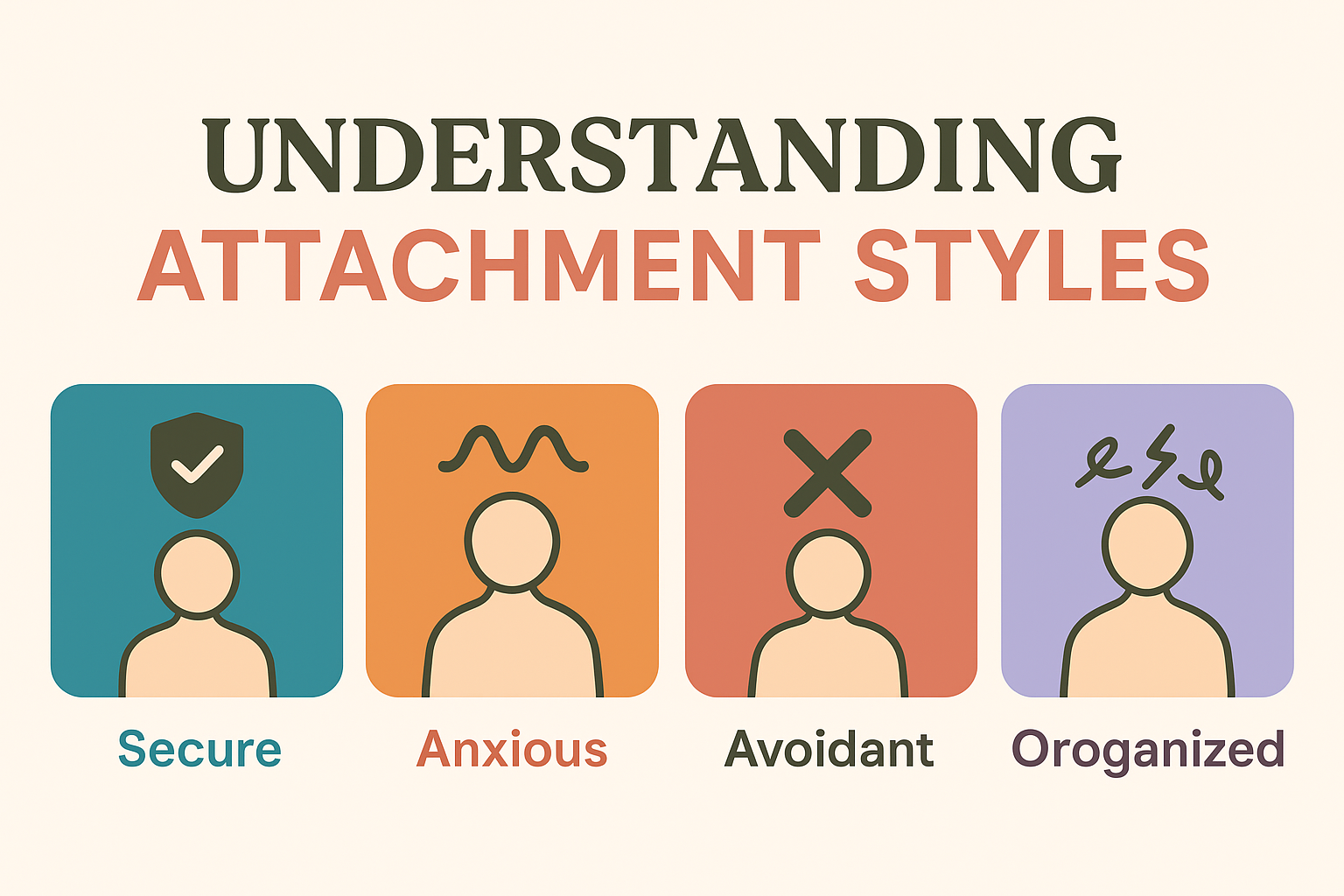
According to attachment theory, there are four main attachment styles:
- Secure
- Anxious (or preoccupied)
- Avoidant (or dismissive)
- Disorganized (or fearful-avoidant)
Understanding your style — and your partner’s — can transform how you build, maintain, and repair emotional bonds.
1. The Secure Attachment Style
What It Means
People with a secure attachment grew up with caregivers who were emotionally available and consistent. They learned that love is safe and dependable — that closeness does not threaten independence.
In adulthood, securely attached individuals feel comfortable with both intimacy and autonomy. They can express emotions openly and trust others.
Pan Macmillan: Attachment Styles 101
Common Traits
- Open and honest communication
- Balanced independence and emotional closeness
- Trust and emotional stability in relationships
- Constructive conflict resolution
Example from Attached
Dr. Levine describes secure partners as “anchors.” They can soothe anxious partners and calm conflicts without losing themselves in drama.
Compatibility
- Secure + Secure → emotionally balanced, trusting relationship
- Secure + Anxious → can work well; secure partner provides reassurance
- Secure + Avoidant → stable if boundaries and communication are respected
Takeaway
This is the healthiest and most stable attachment style. People with secure attachment experience deeper trust, long-term satisfaction, and fewer conflicts.
2. The Anxious (Preoccupied)
What It Means
Anxious attachment develops when love in childhood was inconsistent — sometimes warm, sometimes distant.
As adults, these individuals crave closeness but fear abandonment. They often worry about being “too much” or “not enough” for their partner.
Allure: Understanding Attachment Styles
Common Traits
- Intense need for reassurance and closeness
- Overthinking and fear of being left behind
- Emotional highs and lows in relationships
- Jealousy or clinginess during uncertainty
Example from Attached
The authors describe how anxious individuals often pair with avoidant partners, creating a “pursue-withdraw” cycle — the anxious partner seeks closeness, while the avoidant one pulls away. This dynamic can be emotionally exhausting.
Compatibility
- Anxious + Avoidant → difficult; reinforces insecurity
- Anxious + Secure → best match; calm support balances fear
- Anxious + Anxious → emotional intensity, but unstable long term
Takeaway
Growth begins when anxious individuals learn self-soothing, set healthy boundaries, and believe they are worthy of stable love.
3. The Avoidant (Dismissive)
What It Means
Avoidant attachment often develops when emotional needs were minimized or ignored in childhood. These individuals learned to depend only on themselves.
As adults, they value independence and often fear being “trapped” in emotional dependence.
Verywell Health: Avoidant Attachment
Common Traits
- Discomfort with emotional vulnerability
- Preference for autonomy and distance
- Difficulty discussing feelings or showing affection
- Tendency to withdraw during conflict
Example from Attached
An avoidant partner might enjoy closeness early on but slowly withdraw when the relationship deepens. As Dr. Levine notes, avoidants often rationalize distance as “needing space,” though it stems from fear of dependence.
Compatibility
- Avoidant + Avoidant → calm but emotionally flat
- Avoidant + Anxious → unstable and cyclical
- Avoidant + Secure → healthy if communication and trust are built
Takeaway
Avoidant individuals can grow toward security by expressing vulnerability, communicating openly, and reframing intimacy as strength — not weakness.
4. The Disorganized (Fearful-Avoidant)
What It Means
The disorganized style often emerges from trauma, neglect, or abuse.
These individuals experience both the desire for closeness and fear of it — a constant emotional push-pull.
Sagebrush Counseling: Understanding Fearful-Avoidant Attachment
Common Traits
- Fluctuating between intimacy and withdrawal
- Fear of rejection but also fear of dependence
- Difficulty trusting others
- Emotional confusion and unpredictability
Example
Someone with this style may crave affection but then push a partner away as soon as they feel vulnerable — repeating the trauma of inconsistency they experienced early in life.
Compatibility
- Works best with a secure partner who provides safety and patience
- Needs therapeutic or self-development work to break unhealthy cycles
Takeaway
Healing a disorganized style requires professional support, emotional awareness, and small, consistent steps toward trust.
Why Understanding Attachment Styles Matters
- Better Self-Awareness – Knowing your attachment style helps explain your emotional triggers and needs.
- Healthier Relationships – You can choose partners who complement your growth rather than reinforce insecurities.
- Conflict Resolution – Recognizing your pattern helps you communicate and resolve tension effectively.
- Emotional Security – Understanding attachment gives you tools to build lasting, fulfilling love.
How to Develop a More Secure Attachment
If You’re Anxious
- Practice self-soothing techniques (deep breathing, journaling).
- Replace negative thoughts: “I’m worthy of calm, consistent love.”
- Build confidence outside of relationships — hobbies, friends, personal goals.
If You’re Avoidant
- Share emotions gradually — even small expressions build connection.
- Reframe vulnerability as courage, not danger.
- Reflect on your fears of dependence — what’s the story behind them?
If You’re Disorganized
- Consider therapy to heal past trauma.
- Create routines of emotional safety (weekly check-ins, rituals of connection).
- Communicate your fears openly — honesty reduces shame.
Take the Attachment Style Test
Curious which style you have? Try this free quiz from Verywell Mind:
👉 What’s Your Attachment Style?
Final Thoughts
Your attachment style isn’t a fixed label — it’s a roadmap.
It reflects how you learned to love and trust, but it can evolve as you grow.
As Dr. Levine and Rachel Heller write in Attached, secure attachment is not the absence of fear — it’s the courage to stay open and connected even when fear arises.
By understanding your emotional patterns and learning new ways to connect, you can build relationships that are not only lasting but deeply fulfilling.