
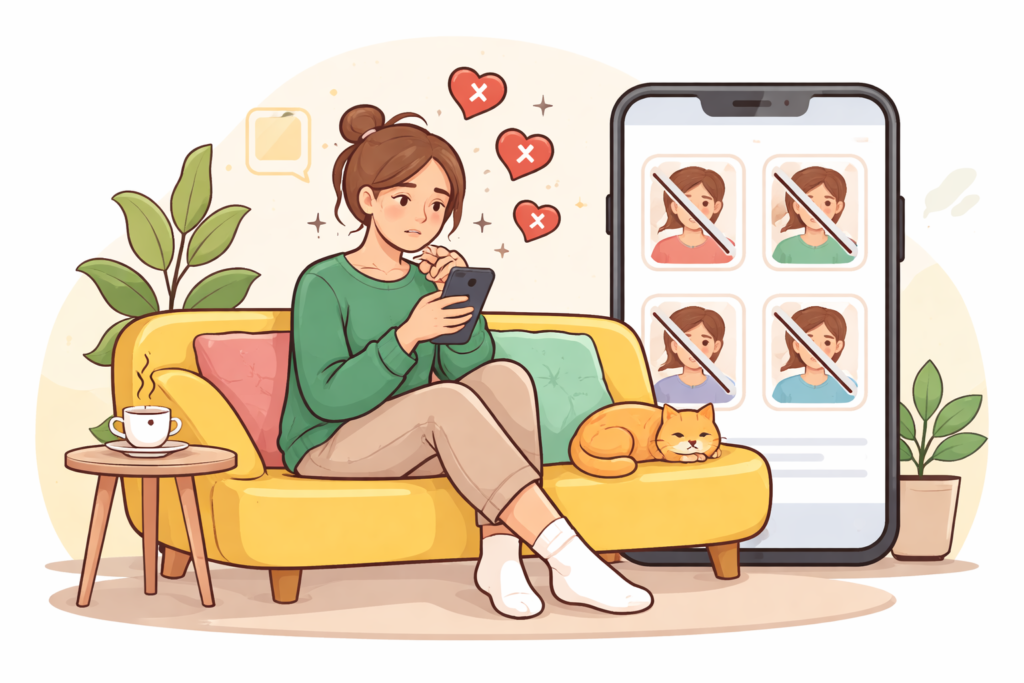
Dating apps for people who hate swiping are designed for users who prefer meaningful conversations and thoughtful matches over endless left-and-right decisions. Instead of judging profiles in seconds, these platforms focus on compatibility, shared interests, and deeper connections.
If you feel tired, bored, or irritated every time you open a dating app, you’re not broken — and you’re not alone. A growing number of people are actively searching for dating apps and dating strategies that don’t rely on constant swiping. Not because they dislike dating itself, but because they want something more intentional, more human, and more effective.
This article is for people who hate swiping and want a smarter approach to online dating. We’ll explore why swipe culture causes burnout, what alternatives actually work, and how to use dating apps without losing your time, energy, or emotional balance.
Why Swiping Feels So Empty Over Time
At first, swiping feels exciting. Every match triggers a small dopamine hit, and the illusion of endless choice can be addictive. But over time, most users experience the same emotional decline.
Swiping Encourages Constant Comparison
When you’re presented with hundreds of profiles, your brain shifts into comparison mode. Instead of asking, “Do I connect with this person?”, you start asking, “Could there be someone better?”
This mindset quietly sabotages emotional investment. Conversations stay superficial because your attention is divided. Even good matches feel disposable.
Matches Stop Feeling Meaningful
One of the biggest frustrations people report is that matches rarely lead to anything real. Chats start, stall, and disappear. If this sounds familiar, you’re experiencing a structural problem, not a personal failure.
Online dating works best when attention is focused — not scattered.
Emotional Burnout Is Inevitable
Swiping turns dating into a repetitive task. The more time you spend scrolling, the less emotionally present you become. Eventually, many users feel numb, cynical, or detached.
At that point, people often say they “hate dating apps,” when what they actually hate is the way they’re forced to use them.
You Don’t Hate Dating — You Hate the Swipe System
This distinction matters.
Most people who hate swiping still want:
- connection
- intimacy
- attraction
- companionship
They just don’t want to treat people like trading cards.
The good news is that you don’t need to quit online dating to escape swipe fatigue. You need a different structure.
What “Dating Without Swiping” Really Looks Like
Dating without swiping doesn’t always mean apps with zero swiping. In practice, it means one (or more) of the following:
- limiting how many profiles you view
- focusing on conversation-first formats
- using apps with curated matches
- adopting a strategy that reduces browsing and increases intention
If you want a practical framework for using dating apps more intentionally (even swipe-based ones), this guide explains it step by step:
Best Dating App Strategy for 2026
Who Benefits Most from a Low-Swipe Dating Approach
Not everyone struggles with swiping equally. People who benefit the most from a reduced-swipe approach tend to share certain traits.
This approach works especially well for:
- introverts who value depth over volume
- busy professionals with limited time
- people over 30 seeking emotional stability
- singles looking for long-term relationships
These users don’t want more matches — they want better ones.
The Core Problem: Attention, Not Algorithms
Most dating advice focuses on “finding the right app.” But the real issue is how attention is managed.
Swiping fragments attention. Meaningful connection requires focus.
When attention improves, everything else improves:
- conversations become deeper
- dates happen faster
- attraction feels more natural
- emotional exhaustion decreases
This is why apps and strategies that slow things down often produce better outcomes.
Why Dating Apps for People Who Hate Swiping Are Becoming More Popular
Dating apps for people who hate swiping appeal to users who feel burned out by fast-paced matchmaking and superficial interactions. Many alternative dating platforms now offer profile-based matching, questionnaires, and guided introductions that encourage real communication. These non-swipe dating apps are especially popular among people looking for long-term relationships, as they prioritize depth, personality, and shared values rather than instant visual judgment.
Some well-known dating services focus on compatibility rather than swiping. Platforms like OkCupid emphasize detailed profiles and match questions.
Psychology Today has also discussed how slower, more intentional dating experiences can lead to more meaningful connections.
Dating App Formats That Work Better for Swipe-Haters
Instead of naming specific apps, it’s more useful to understand formats. The format determines how you feel while dating.
1. Conversation-First Platforms
These apps emphasize prompts, written answers, and values. You interact with ideas and personality before focusing on looks.
They reduce impulsive decisions and make conversations easier to start.
2. Limited-Match Systems
Some platforms restrict how many matches you receive per day. This removes overwhelm and forces intentional choice.
Fewer matches often lead to better conversations — not worse ones.
3. Structured, Relationship-Oriented Platforms
These platforms attract users who are done with casual browsing and want something more serious. Profiles tend to be longer, intentions clearer, and pacing slower.
If you’re exploring platforms with that focus, this overview can help you choose:
Best Dating Apps in 2025
How to Use Any Dating App Without Swiping Yourself Into Burnout
Even if you stay on a mainstream app, you can drastically change your experience by changing how you use it.
Step 1: Stop Browsing Out of Boredom
Only open dating apps when you’re mentally available to talk. Boredom swiping creates low-quality matches and low motivation.
Step 2: Set a Hard Time Limit
10–15 minutes per session is enough. Anything beyond that leads to impulsive decisions.
Step 3: Choose People, Not Profiles
Instead of asking “Is this attractive?”, ask:
- Does this person seem emotionally present?
- Do they communicate clearly?
- Do their values align with mine?
Step 4: Move Toward Real Interaction
Dating apps are tools — not destinations. The goal is a real-life connection.
If texting feels endless or awkward, this guide explains how to handle pre-date communication without killing attraction:
How to Text Before a First Date: The Right Approach
Why Emotional Availability Matters More Than Chemistry
One reason people burn out on dating apps is repeatedly matching with emotionally unavailable partners. Chemistry can be intense, but without emotional readiness, it leads nowhere.
Signs of emotional availability include:
- consistency
- clear communication
- willingness to make plans
- emotional presence
Learning to recognize this early saves enormous time and energy. This article breaks it down clearly:
Emotional Availability: How to Recognize If Someone Is Ready for Love
Breaking Repeating Dating Patterns
If every dating experience feels the same — same disappointments, same endings — the issue may not be the apps at all.
Many people unconsciously repeat relationship patterns:
- chasing emotionally distant partners
- losing interest when things feel stable
- confusing intensity with compatibility
Understanding these patterns is often the turning point. A deep explanation can be found here:
Psychological Patterns in Relationships: Why We Repeat Them & How to Break the Cycle
Once you recognize the pattern, you stop blaming dating apps and start making different choices.
Building a Profile That Attracts the Right Kind of People
If you hate swiping, your profile should repel swipe-addicted users and attract people who value depth.
A strong profile signals:
- emotional stability
- real-life engagement
- clarity of intention
- ability to communicate
Avoid generic phrases like “love traveling” or “just seeing what’s out there.” Instead, show how you live and what kind of connection you want.
You don’t need to overshare — you need to be specific.
Turning a Good Conversation Into a Real Date
One of the biggest mistakes swipe-fatigued users make is texting too long. Connection builds faster in real life.
A simple rule:
If the conversation feels easy and mutual, suggest a date within a few days.
Keep it light:
- coffee
- a walk
- a casual drink
No pressure. No overplanning.
Why Slower Dating Often Leads to Better Relationships
Slowing down doesn’t mean lowering standards or becoming passive. It means being selective instead of reactive.
People who date slowly tend to:
- choose better matches
- communicate more clearly
- avoid emotional burnout
- build stronger attraction
Dating becomes calmer, more grounded, and far less exhausting.
Final Thoughts: Dating Should Feel Human Again
If you hate swiping, trust that instinct. It’s your attention pushing back against a system that wasn’t designed for emotional depth.
You don’t need endless matches or constant novelty.
Dating doesn’t have to feel like a game to be won.
What actually matters is focus, intention, and a structure that supports real connection.
Online dating can still work — but only when you stop swiping mindlessly and start choosing consciously.